Greyzones: On Presence and Absence, and the Book as a Device for Navigating Invisible Structures

Updated: May 11

A dialogue between Nabuurs&VanDoorn (NVD) and Erika Radonic (ER)
For over a decade, NVD have examined how images, archives, and urban space shape perception. Their publication Greyzones, developed alongside the ongoing project Zwischenlandschaften, marks a shift from site-specific intervention toward instruction-based performance. In the following conversation with art historian and curator ER, the book emerges not as a document of completed actions, but as an operative device, one that moves with the reader and recalibrates how space is encountered in the present.

NVD: At the core of our work is a recurring question: what could an image of the unseen look like? Or how might an image reveal that we do not see what we are looking at? This arose through our engagement with archives, where absence often appears not as emptiness, but as structure, through redaction, omission, and fragmentation.
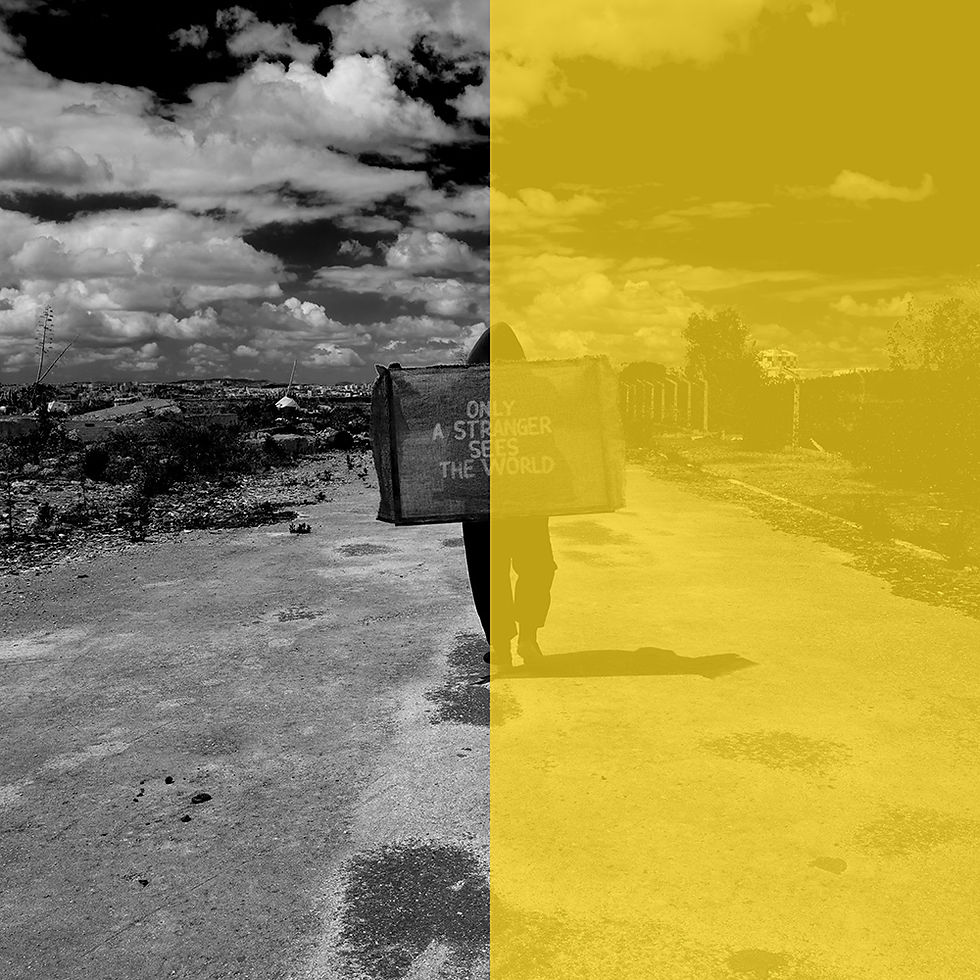
In Zwischenlandschaften, we projected censored archival fragments back into the city. These projections did not restore what was missing. They displaced it into the present, allowing suppressed images to circulate spatially and temporally. In Living Atlas, the nomadic project we began in early 2025, this approach evolves. Instead of reintroducing fragments, we apply color-coded overlays that translate sites into performative scores. Projection and code function as portals, not representations, they allow multiple realities to coexist within a single location.

ER: While reading your book Greyzones with conversations and first reader perspectives on the Zwischenlandschaften series, I did not experience the book as a static document. It felt more like a companion moving alongside me. Its structure does not operate as an explicit manual, though it subtly guides perception. The sequencing of images, references, and spatial interventions produces a heightened awareness of thresholds, overlooked infrastructures, and invisible regulations that silently govern movement.
NVD: That is exactly the effect we wanted to achieve, and what we experience while working in public space. For example, the other day here in L.A. at the site where, in 1975, Bas Jan Ader prepared, Ocean Wave, the boat he used in his project In Search of the Miraculous, we also encountered the unexpected. While photographing and coding the location, security personnel approached us, explaining that photography was prohibited. At first they claimed it was to protect member privacy. Then they mentioned that two people had recently been stabbed there, and protocols had been intensified. This information is neither online nor immediately legible. You cannot fully grasp the territory you are entering; local actuality does not present itself transparently.

These are moments when the grey zone manifests physically as well as conceptually. You move through a site that is mythologically charged while navigating contemporary infrastructures of control, risk, and regulation. Such encounters arise because a site is first explored online, then recognized on location, yet never without risk. Grey zones are not neutral. They reveal who is vulnerable and who is protected.
ER: What strikes me in relation to your experience at the Bas Jan Ader site is how the book prepares the reader for precisely that kind of encounter: the dissonance between mythologized history and present-day control. The publication does not dramatize such frictions, but it sensitizes the reader to them. It trains attention toward the gap between what is historically charged and what is administratively enforced.
Thus, the book becomes navigational. It does not direct the reader toward fixed destinations but guides how space itself is encountered. The reader participates not by reenacting interventions, but by becoming more attentive to their own movement and surroundings (and to the systems that remain concealed within them).
The agency of the book emerges through this encounter.
NVD: During earlier interventions in Milan (2019), we asked passersby how they imagined the future of paradise (Zwischenlandschaften 4). Some assumed our action was advertising; others questioned our permission to intervene. The conversation shifted from paradise itself to the mechanisms that determine what may appear in public space. The grey zone exists precisely between what is permitted and what is perceived as deviation.

ER: I understand this shift in your practice as a movement from trace to protocol. In Greyzones, interventions leave behind traces; photographs become evidence that something has happened, that a body once occupied and disturbed a site. In Living Atlas, the emphasis shifts toward reproducibility.
NVD: This shift, from intervention toward code, changes how presence operates. Interventions insert attention into existing structures, producing moments of displacement. In Zwischenlandschaften, projected images marked sites by interrupting continuity. In Living Atlas, sites are translated into scores, a set of conditions to be performed and re-performed. Presence becomes less autonomous, more distributed. The grey zone is no longer just a site to enter; it lingers, transferable and reactivatable elsewhere.
ER: If intervention reveals instability, performance sustains it. If projection displaces the archive into the present, coding distributes it. The grey zone becomes less a location one enters and more a method one activates. It is no longer only the space between permission and deviation, but a structure that can migrate across cities, bodies, and contexts.
NVD: This understanding transforms how the book operates. Greyzones was initially conceived as a travel guide, not conventional, but something that moves with the reader. It does not document completed actions; it remains open, extending projects into new contexts.
ER: This is where your observation that grey zones are not neutral becomes particularly resonant. The book does not treat ambiguity as abstract. It quietly reveals how vulnerability, privilege, surveillance, and class are embedded in public space. When you describe being approached by security personnel, the grey zone ceases to be metaphorical; it becomes materially embodied. Reading the book with this awareness sharpens its political dimension. It is not only about perception, but about who is allowed to perceive, document, or remain.
NVD: Perception is increasingly mediated by invisible systems. Archives, infrastructures, and digital platforms shape spatial experience without appearing in it. Public space is governed by surveillance, ownership, and security protocols; questions of access have become urgent. Working directly in public space, we encounter infrastructures that intersect with our methods. By repeating projects across distant locations, patterns emerge that are otherwise hard to perceive.
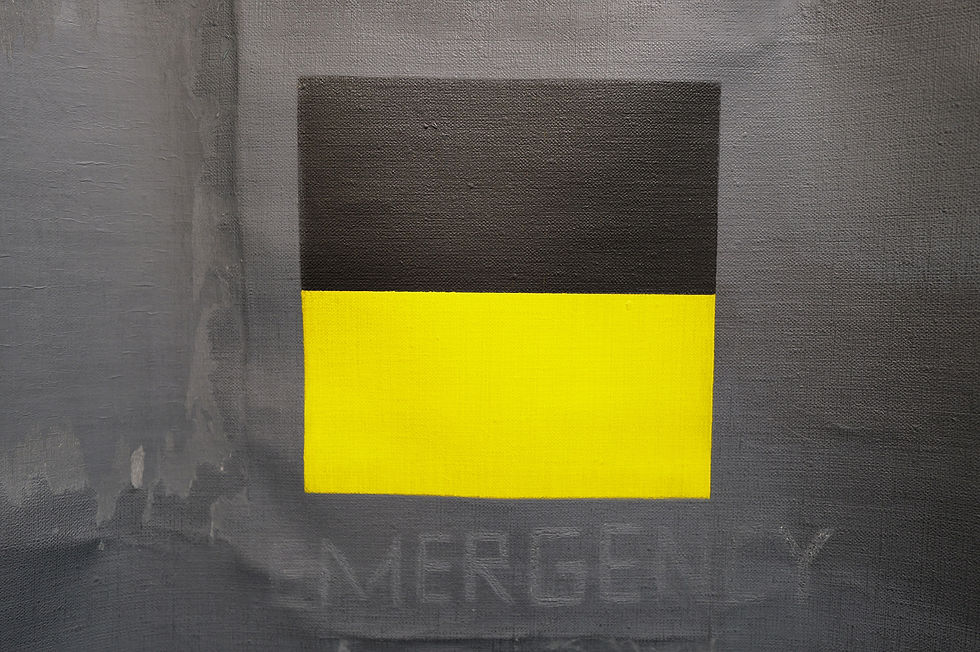
Greyzones invites the reader not merely to observe infrastructure, but to enter it, experiencing how rules, safety, class, and visibility intersect. Representation is insufficient. We need structures that allow navigation of what cannot be fully seen. Greyzones operates in this space between document and instruction, between record and possibility. It does not resolve ambiguity; it sustains it, letting the reader move between past actions and future potential.
ER: This openness produces a particular form of participation. The reader does not simply receive the work but becomes implicated in its continuation. After engaging with the book, I found myself noticing transitional spaces more acutely: waiting areas, infrastructural edges, passages that normally remain peripheral. But beyond noticing, I also became more aware of my own positionality within those spaces — whether I felt authorized, observed, or temporarily suspended between roles.
In this sense, the book performs not through explicit instruction, but through its capacity to shift awareness. Each encounter produces new relations between the reader, the image, and the environment. The publication becomes almost a soft infrastructure itself: moving, repositioned, staged in different contexts, absorbing the atmosphere of each site it enters.
Its meaning remains contingent, but not unstable. Rather, it remains responsive.
NVD: Yes, if maps promise orientation through representation, Greyzones offers orientation through experience. It does not fix space in place; it allows space, and the reader, to remain in motion. The book does not mark a conclusion, but opens a transferable, activating structure.
Greyzones is available via Kunstverein Publishing and selected bookstores.


Comments