Los Angeles Elsewhere


An instruction to play Lana del Rey’s “National Anthem” returned as the United States national anthem, played in the style of Jimmy Page. We had connected the instruction to the place where Jean Harlow once lived, drawing on Del Rey’s lyrics about money, glamour and success. Daniël Verberk’s interpretation rearranged those associations. For a moment, it felt as though the blonde bombshell had been elected president.
During our residency at ALARM in Beugen, we invited Daniël to interpret the blue instructions from our Los Angeles edition of Living Atlas. Thousands of kilometres from the locations we had mapped, we wanted to investigate what displacement would do to the relationship between place, instruction and player.
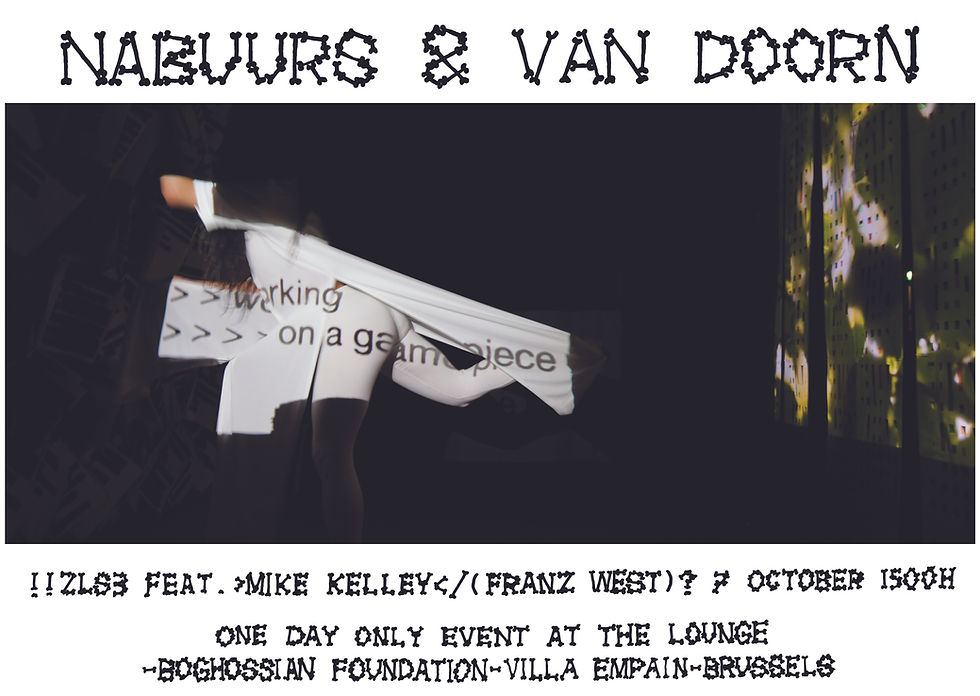
For Living Atlas, we translate encounters with a city into colour-coded collages and instructions for action. Previously, we returned to mapped locations with Timo Paris and Skylar Tang. Their interpretations encountered the surroundings from which the instructions had emerged: passing traffic, incidental sounds, people going about their day. In Beugen, that immediate contact was missing. We constructed a spatial projection field to give the absent locations a presence during the performance.
Across transparent fabrics, we projected footage we had recorded on the metro, at the beach and in the neighbourhoods along our route. We combined these recordings with appropriated historical imagery of Marilyn Monroe, images of Chicano tattoo parlours, and the corresponding collages and colour codes. Images fell across Daniël’s clothing, skin and guitar, breaking over different surfaces and passing through the fabric. At times, the guitarist became barely distinguishable from the places moving across him.
Daniël responded to the rhythm of the waves and the automated voice of a subway station. He adjusted his sound effects as images of the sea and neighbourhoods drifted by. His playing drew our attention to rhythms and relationships we had not anticipated.
His ability to recreate Jimmy Page’s guitar sound complicated this encounter further. That recognisable sound carried associations of its own into our Los Angeles material. In his rendition of the anthem, the guitar brought rock spectacle into contact with national ceremony and Hollywood glamour. The instruction’s reference to Del Rey remained present for us, even as we heard a different song. Several readings occupied the same moment.
The displacement made the stages of the work palpable. Mapping, interpreting and recording happened in different places and under different conditions. What we had coded through encounters in Los Angeles was decoded through Daniël’s musical vocabulary, then recoded through the projections, the acoustics and the recording of this new performance.
For us, this gave prosthetic memory a particular tension. We remembered walking through the locations; Daniël encountered them through the material we had assembled. Yet his interpretation changed what returned to us. Watching and listening, we experienced those places for a second time, virtually, through choices we had neither made nor foreseen.
Our memories remained recognisable, but now contained an encounter that had never happened in Los Angeles.

Comments