Naked Cities -> Living Atlas

Updated: Jan 24
From Weegee to Debord to Zorn to Nabuurs&VanDoorn and Back: A Journey Through Urban Artistry

The threads connecting Weegee, Guy Debord, John Zorn, and the artist duo Nabuurs&VanDoorn weave a fascinating lineage of urban observation, artistic improvisation, and performative mapping. Each approach interrogates how we navigate, perceive, and reimagine the city.
1945 – Weegee’s Naked City
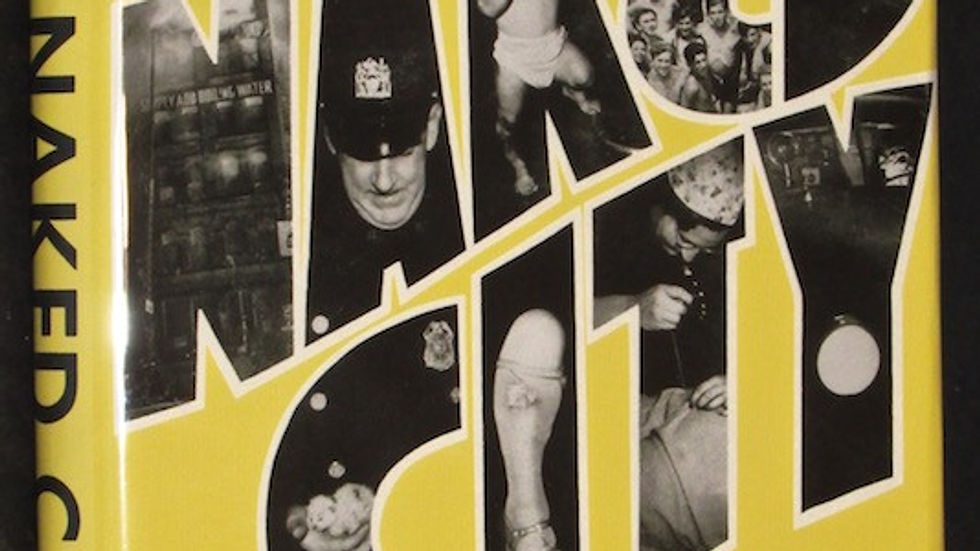
The story begins in post-war New York. Photographer Weegee, born Arthur Fellig, published Naked City in 1945. This stark visual chronicle captures urban life and crime scenes. His images expose the city in all its raw immediacy. They reveal both the spectacle and the invisible flows of human behavior. The book’s title, evocative and unflinching, would resonate across disciplines for decades.
1961 – Guy Debord’s Psychogeographical Maps

Fast-forward to the early 1960s: the Situationist Internationale, led by Guy Debord, began producing psychogeographical maps of Paris. Debord’s maps, such as those collected in Naked City (1961), were not about streets and addresses in the conventional sense. Instead, they served as instruments for exploring the emotional and social topography of the urban landscape. Debord’s radical experiments sought to reveal the underlying currents of everyday life. He turned the city into a playground for dérive, drift, and collective imagination.
1988 – John Zorn’s Band Naked City

In 1988, avant-garde musician John Zorn formed the band Naked City, naming it after Weegee’s iconic book. The band became known for its fast-paced, genre-blurring compositions. Zorn's work was deeply inspired by structured improvisation, game pieces, and the radical unpredictability of urban life. His piece Cobra (1984) and collaborations with the experimental filmmaker Xu Feng introduced rule-based improvisation into musical practice. This approach resonates with the open-ended explorations of psychogeography.
2025–2026 – Nabuurs&VanDoorn’s Living Atlas

Nabuurs&VanDoorn’s Living Atlas picks up this lineage and brings it into contemporary practice. Their project is a performative cartography where reality and fiction co-produce new ways of navigating public space. Drawing inspiration from Debord’s psychogeographical explorations, they combine digital overlays, color-coded maps, and participatory instructions. This creates urban experiences that resist full comprehension, much like Zorn’s improvisational scores or Weegee’s unflinching photographic sequences. The duo’s work treats the city as a dynamic, relational system. Each encounter or action contributes to a continuously evolving atlas.
Connecting the Dots

From Weegee’s crime scenes to Debord’s dérives, Zorn’s rule-based improvisation, and Nabuurs&VanDoorn’s performative mapping, there is a continuous fascination with the city as a site of unpredictability, improvisation, and layered narratives. In all these works, grasping the city in its entirety is impossible. The point is to navigate, respond, and engage with what emerges. This transforms maps, images, and scores into living, evolving experiences.
In this way, Living Atlas is less a literal atlas and more an ongoing conversation with these precedents. It embraces the unknowable, the improvised, and the performative. This extends a lineage that stretches from 1945 New York to today’s global urban explorations.
The Art of Urban Exploration
Urban exploration is not merely about the physical act of moving through space. It is an invitation to engage with the unseen layers of our surroundings. Each street corner, each alleyway, holds stories waiting to be uncovered. The act of exploring becomes a dialogue with the city itself.
The Sensory Experience
As I wander through urban landscapes, I am struck by the sensory overload. The sounds of bustling streets, the vibrant colors of graffiti, and the scents of street food create a tapestry of experiences. Each moment is a brushstroke on the canvas of my memory.
The Role of Memory
Memory plays a crucial role in how we perceive urban spaces. It shapes our understanding and influences our interactions. The past lingers in the air, whispering stories of those who walked these streets before us. Nabuurs&VanDoorn’s Living Atlas taps into this notion, allowing us to navigate not just the physical space but also the memories embedded within it.
The Intersection of Art and Urban Life
Art has the power to transform our perceptions of urban life. It challenges us to see the familiar in new ways. Through performance, installation, and cartographic fiction, Nabuurs&VanDoorn invite us to question our relationship with the city. Their work encourages us to embrace the complexity of urban existence.
Conclusion: A Continuous Journey
The journey through urban artistry is ongoing. It invites us to explore, reflect, and engage with the world around us. From the stark realities captured by Weegee to the radical explorations of Debord, the improvisational spirit of Zorn, and the innovative practices of Nabuurs&VanDoorn, we are reminded that the city is a living entity. It evolves, breathes, and pulses with life.
In this ever-changing landscape, we find ourselves not just as observers but as participants. We contribute to the narrative, weaving our own stories into the fabric of the urban experience. Through this lens, we can appreciate the beauty and complexity of our surroundings, embracing the unknown and celebrating the art of exploration.
As we navigate this intricate web, we realize that the journey itself is the destination. And in this journey, we discover the essence of what it means to be human in an urban world.


Comments