Landscape Adrift — Following the Pedlar

Updated: Jun 5

Some figures continue to move through history long after they have been painted. For us, the Pedlar in the work of Hieronymus Bosch is one of them.
As we develop Landscape Adrift, a project generously supported by the Province of Noord-Brabant, the Pedlar repeatedly returns, not as an image but as a method of orientation. A solitary traveller crossing a territory whose coordinates can no longer be taken for granted.
The landscapes we have chosen to walk are often described as natural, but little about them is natural in the sense of being untouched. Watercourses have been redirected, peatlands excavated, fields consolidated, villages expanded, infrastructures constructed and abandoned. Centuries of decisions have accumulated here. What appears stable is often only the latest arrangement.
Yet the landscape does not simply preserve these histories. It edits them.
Certain traces remain visible. Others disappear. Some return unexpectedly. A road survives after its destination has vanished. A canal remembers an economy that no longer exists. A field boundary continues to organise movement long after the reason for its construction has been forgotten. The landscape is full of such delayed signals.
Brabant has long functioned as a territory of extraction and transformation. Peat, agriculture, industry, logistics and technological development have each reorganised the land according to their own logic. Today new actors arrive. Data infrastructures, energy networks and technological campuses increasingly occupy the horizon. The landscape is once again being prepared for a future that presents itself as inevitable.
But inevitability is often a form of forgetting.
Throughout the project we search for what we call Landscapes 404: places where the landscape has not disappeared, but where its meaning can no longer be fully retrieved. These are locations that remain physically present while becoming conceptually inaccessible. Fragments persist, yet the narrative that once connected them has broken apart.
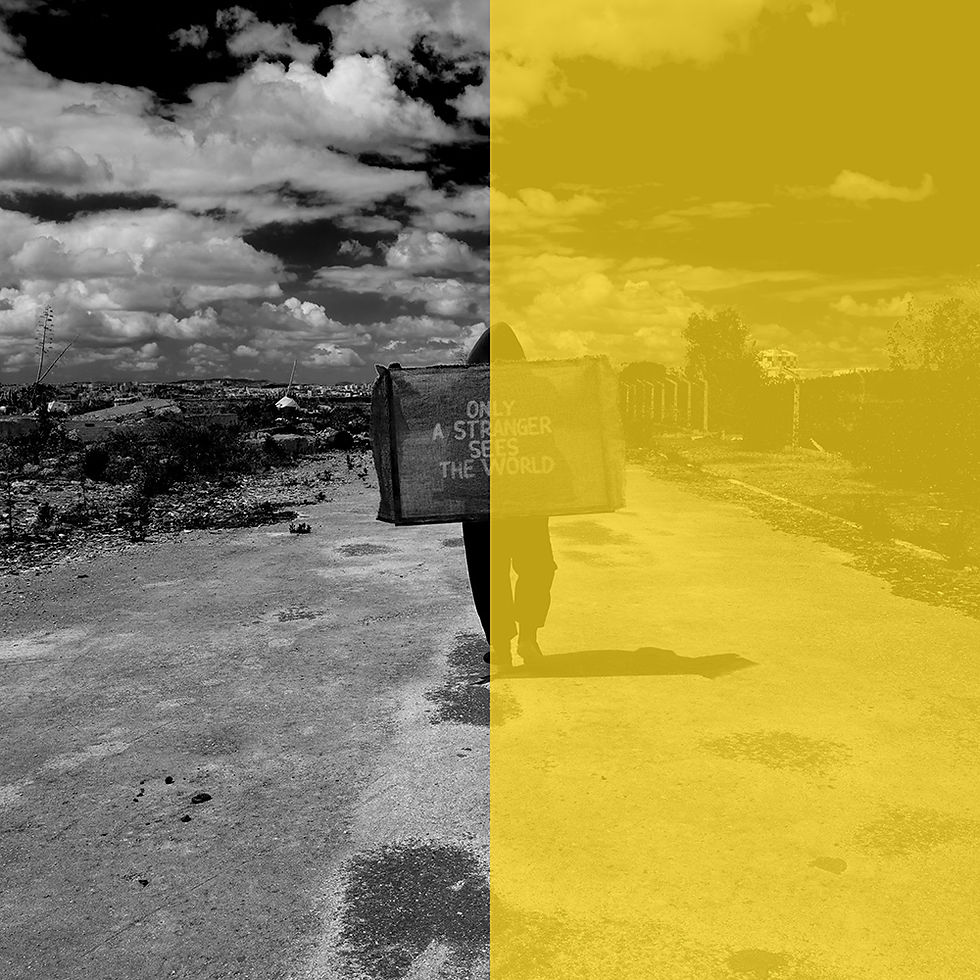
A recurring figure within the project is a solitary walker carrying a jute surface, here bearing a possible thought by Dutch poet and socialist thinker Henriëtte Roland Holst:

SILENCE KNOWS MANY SOUNDS
Comments